
 Select Language
 English
 Spanish
 Polish
 Japanese
 Italian
 French
XPS Recycling for the Construction Industry: From Insulation Waste to Resource Recovery
XPS insulation boards are widely used in walls, roofs, floors and other building applications because they provide thermal insulation and moisture resistance. During production, cutting, transportation and installation, however, a certain amount of XPS foam becomes off-cuts, rejected boards or damaged insulation waste.
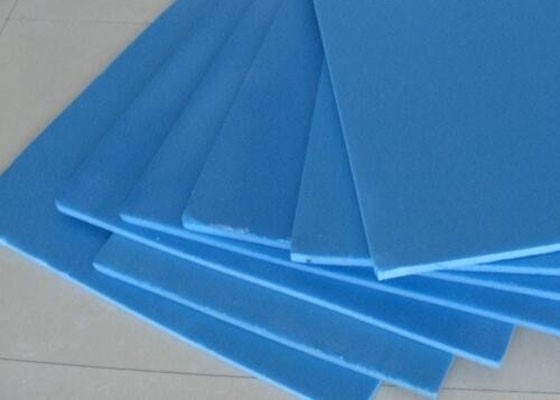
XPS Insulation Waste Management in Construction
XPS waste is often generated when insulation boards are cut to size or removed from damaged packaging. Large pieces can take up considerable space, while smaller off-cuts may be difficult to collect and transport together with other construction waste. If XPS is mixed with wood, concrete, metal or general site waste, the possibility of recovering it may be reduced. Separating the foam at the production line, warehouse or construction site makes it easier to process and improves the quality of the recovered output.
XPS Recycling Solution for Construction Industry
For construction material manufacturers, an efficient XPS recycling solution can turn XPS foam scrap from a disposal problem into a recyclable resource. XPS (extruded polystyrene) foam is lightweight and bulky, so production off-cuts can quickly increase storage and transportation costs. GREENMAX foam densifier uses compression and controlled melting technology to process suitable XPS waste into dense blocks, significantly reducing its volume and making the material easier to store, collect, and transport. This is especially useful for manufacturers with large volumes of XPS off-cuts or multiple production sites.
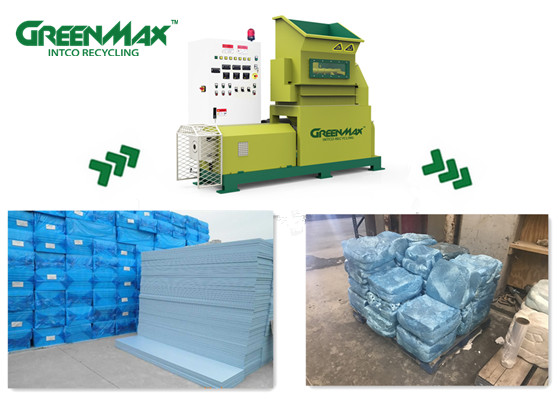
However, XPS densification is only the first step in the recycling process. After the loose foam is compressed, the dense XPS blocks can be transported to a centralized recycling facility or further processed using GREENMAX pelletizer. The pelletizing system can process suitable densified XPS material into recycled plastic particles, providing a more convenient feedstock for downstream manufacturing. The final quality and application of the recycled particles depend on the type of XPS, additives, contamination, and requirements of the end product.
By combining GREENMAX foam densifier and pelletizer, manufacturers can build a more complete XPS foam recycling system, from volume reduction to material recovery. XPS scraps from different production locations can be densified near the source and then transported efficiently for further processing, reducing storage and logistics pressure. Instead of treating XPS off-cuts as ordinary industrial waste, companies can recover them as a secondary plastic resource and potentially use the recycled material in new insulation products or other plastic applications.
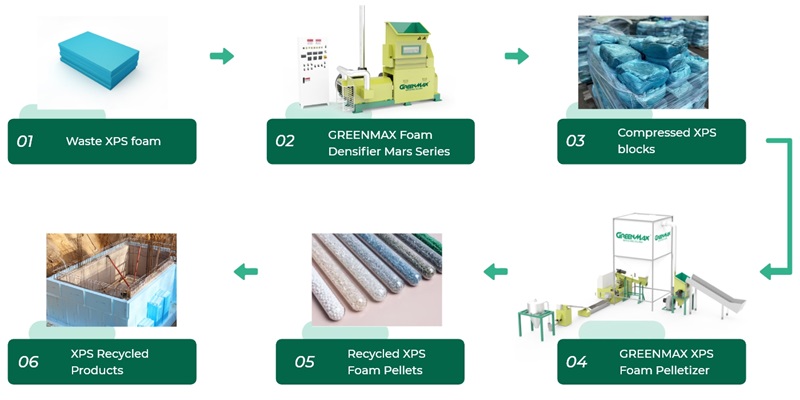
Manufacturer Uses Foam Recycling Machine to Dispose Waste XPS Foam
Owens Corning, a major insulation manufacturer in the United States, generates XPS scrap from unqualified or rejected insulation boards during production. The company previously sold the XPS waste to another company for granulation, but the loose foam created storage pressure and was not easy to manage efficiently.
With support from GREENMAX, the downstream granulation company introduced the GREENMAX foam recycling machine to process the XPS waste. The machine can achieve a high compression ratio, allowing the loose foam to be turned into dense blocks that are easier to store and transport.
The compressed XPS provides a more stable supply for the granulation business, while Owens Corning can reduce the space required for waste storage. After granulation, the recovered particles can be used to produce other plastic products, creating value for both the insulation manufacturer and the recycling company.
XPS recycling allows insulation waste to move beyond simple disposal. By using an XPS compactor to reduce volume and a granulation process to recover usable particles, construction material manufacturers can build a more practical recycling system and create a better connection between production waste and new products.