 Select Language
 English
 Spanish
 Polish
 Japanese
 Italian
 French
How Automotive EPP Packaging Builds a Closed Loop from Use to Recycling and Reuse
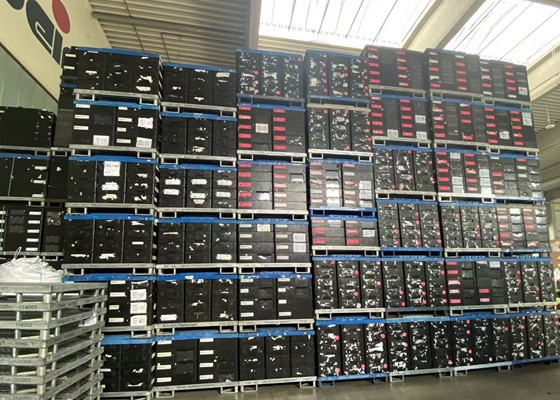
In the automotive industry, many EPP foam packaging products are not designed to be used once and discarded. They are part of returnable packaging systems for moving and protecting auto parts. EPP inserts, custom trays, dividers, cushioning blocks, and protective dunnage are commonly used between OEMs, Tier 1 suppliers, Tier 2 suppliers, and packaging service providers.
In this context, an OEM refers to the vehicle manufacturer. A Tier 1 supplier delivers parts or systems directly to the automaker, while a Tier 2 supplier provides components, materials, or processing services to Tier 1 companies.
EPP is lightweight, impact-resistant, and suitable for repeated use, making it a common returnable packaging material in automotive logistics. However, returnable packaging does not mean zero waste. After repeated use, EPP inserts may become damaged, deformed, contaminated, or no longer suitable for new parts. Model changes, part redesigns, or updated packaging standards can also make existing EPP packaging obsolete.
This is the real-world challenge that EPP foam recycling needs to address: how to move retired EPP packaging from an operational burden into a recyclable material stream.
The Role of Automotive Plants in Closed-Loop EPP Foam Recycling
For an automotive plant, handling EPP packaging waste is only one part of daily operations. Most plants do not need to build a full in-house recycling line for shredding, pelletizing, compounding, and manufacturing new products.
A more practical role is to take care of the front end of the recycling chain: collect retired EPP packaging, sort it when necessary, reduce its volume on site, and send the compacted blocks to downstream recyclers, pelletizing plants, or compounding facilities. This is a realistic way for the automotive supply chain to participate in expanded polypropylene recycling.
In other words, the goal is not to let used EPP packaging go to landfill or mixed waste streams, but to turn it into a transportable, tradable, and reusable recycling resource.
The key challenge is logistics. EPP packaging is bulky but very lightweight. If it is transported loose, a truck or container fills up quickly while carrying very little actual material weight. This makes the transportation cost per ton extremely high.
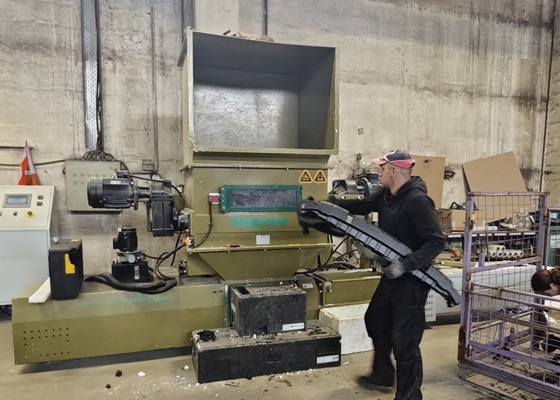
GreenMax recommends installing an EPP foam compactor at the plant to process retired EPP packaging into dense blocks before transportation. This helps reduce storage space, improve loading efficiency, and lower transportation costs before the material is sent to downstream recyclers or pelletizing facilities.
Why Choose a Cold-Compaction Foam Recycling Machine?
For automotive EPP packaging, GreenMax often recommends a cold-compaction foam recycling machine instead of a hot-melt solution. One reason is that many downstream pelletizing and recycling plants in Europe prefer cold-compacted EPP foam blocks.
First, cold compaction does not significantly change the original physical properties of the material. This makes quality control easier during later pelletizing and compounding processes. It can also make it easier for automotive plants to find suitable sales channels for compressed EPP blocks.
Second, some high-density EPP materials used in automotive packaging may not perform well with thermal melting. Cold compaction is often more suitable for these materials because it is more adaptable and less aggressive to the material structure.
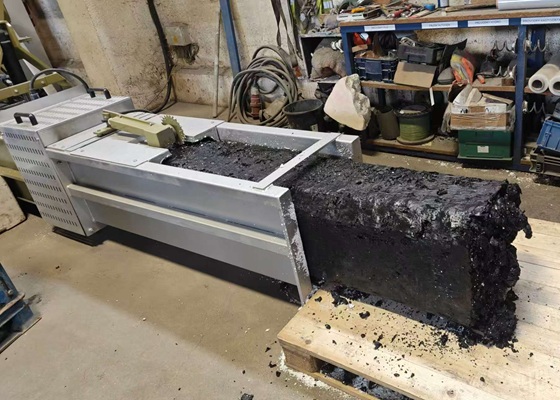
To help cold-compacted blocks keep a stable shape during long-distance transportation, the upgraded GreenMax Zeus series EPP foam compactor includes a surface-melting function. As EPP pieces are continuously compressed by the screw, the surface of the block is thermally treated. The outer layer quickly solidifies, helping the block hold its shape while the inner material properties are largely maintained.
This method combines low odor, lower energy consumption, and better recycling quality. It is well suited for the recovery of automotive EPP returnable packaging.
How EPP Blocks Are Reused: Pelletizing and Compounding
After used EPP packaging is compacted, it can move into downstream recovery processes. Today, there are two main reuse routes for recycled EPP material: direct pelletizing and PP compounding.
In direct pelletizing, compacted EPP blocks are shredded, melted, and pelletized into recycled EPP pellets that can be used again in suitable production processes. For example, ARPRO from JSP has introduced material grades containing 30% recycled EPP.
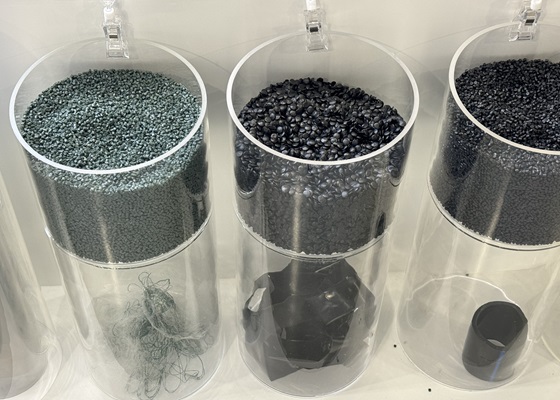
The other route is compounding, which is becoming a larger application direction for recycled EPP. EPP is expanded polypropylene. After recovery, it can go through shredding, pelletizing, and formula adjustment to become modified PP pellets suitable for injection molding, extrusion, or other molding processes.
These modified pellets can be customized according to customer requirements for toughness, rigidity, impact resistance, color, flowability, and processing performance. They can be used in automotive components, reusable logistics boxes, plastic pallets, household plastic products, and industrial plastic parts.
Compared with simply re-foaming the material, compounding offers broader application possibilities and better adaptability to different product requirements. This makes it an important direction for the future of closed-loop EPP foam recycling.
GreenMax and INTCO Recycling: From Recovery to Closed Loop
GreenMax is a subsidiary of INTCO Recycling. In addition to supplying foam recycling machine solutions, GreenMax also purchases compacted EPP blocks globally for INTCO’s recycling and reuse system.
INTCO Recycling is involved in EPP and PP material compounding and reuse. After processing, the pellet sales team can supply modified PP pellets to manufacturers of recycled products.
PP compounding is a technical process that is usually customized according to customer needs. An automotive parts manufacturer may require different material properties than a company producing returnable boxes or plastic pallets. This is why clean sorting, stable material supply, and reliable compaction at the beginning of the chain are important.
In this closed loop, the automotive plant or packaging service provider uses an EPP foam compactor to turn retired EPP packaging into compacted blocks. GreenMax helps connect the blocks with recovery channels. INTCO Recycling then supports further compounding and pellet sales. Downstream customers use the modified pellets to produce automotive parts, returnable boxes, or other PP products.
This creates a complete chain: automotive EPP packaging is used, repaired, retired, compacted, recycled, compounded, and reused. For companies in the automotive supply chain, building an expanded polypropylene recycling loop does not mean completing every step in-house.
With a suitable foam recycling machine, automotive plants can process used EPP packaging efficiently, connect with downstream reuse channels through INTCO Recycling, reduce transportation costs, and participate in EPP foam recycling with a more stable material outlet.
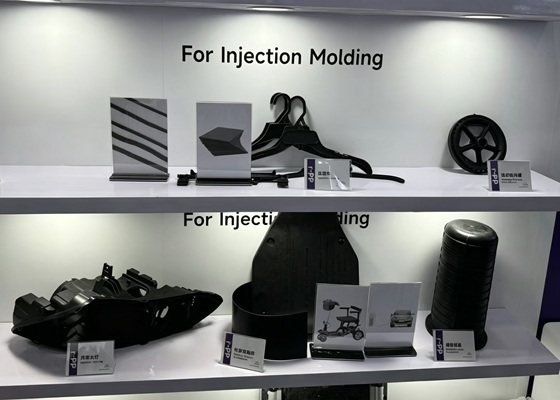
EPP returnable packaging plays an important role in protecting automotive parts and improving logistics efficiency. But even reusable packaging eventually reaches the end of its service life.
Without a proper recovery plan, retired EPP packaging can quickly become a bulky storage and transportation problem. With a GreenMax EPP foam compactor, companies can reduce volume on site, lower logistics costs, and turn used EPP packaging into a recyclable resource.
A true closed loop for automotive EPP packaging starts when the material is no longer treated as waste, but as a feedstock for the next stage of production.
FAQ
1. Can GreenMax help connect sales channels for compacted EPP blocks?
Yes. GreenMax purchases compacted EPP blocks globally and sends them into INTCO Recycling’s compounding and reuse system. Therefore, we can support machine customers with access to purchasing channels for compacted EPP blocks.
2. Our EPP packaging volume is not stable. Is an EPP foam compactor still suitable?
Yes. For customers with smaller or irregular volumes, GreenMax can provide compact equipment such as the Z-C50. We can also customize solutions with a larger shredder and a smaller compaction unit. If the business continues to grow, a mid-sized machine is usually recommended to meet long-term processing needs.
3. Can EPP returnable packaging recycling help with customer audits or ESG requirements?
It can help, but only when the company keeps real records of the source, volume, and destination of its EPP waste. For automotive plants, using a foam recycling machine can also support waste sorting, volume reduction, and material recovery practices.